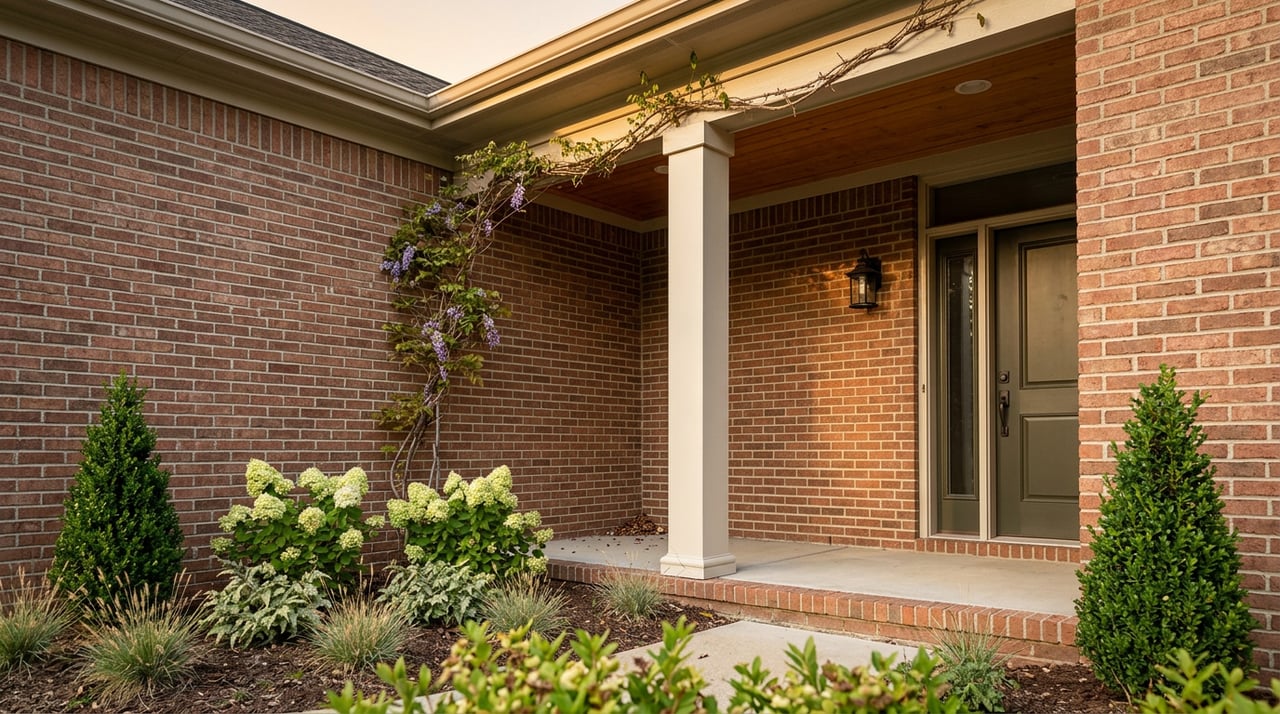
Carmel Radon Disclosure Home Sale Risks Buyers Miss
September 3, 2026
September 3, 2026
A seller sits down with the Indiana Sales Disclosure Form, scans the line about hazardous conditions, and checks "No" next to radon. It feels honest. Nobody in the house has ever coughed strangely or worried about the basement. The box gets checked, the form gets signed, and the listing goes live.
What that box actually means is narrower than most people assume. It doesn't say the home is radon-free. It says nobody has tested it and found a problem. In a city where the local geology and housing stock both point toward elevated readings, that distinction is worth understanding before you sign anything, whether you're the one filling out the form or the one reading it.
Indiana's disclosure form asks for a seller's current actual knowledge. It does not ask a seller to go find out.
Indiana Code requires sellers of most residential property to complete the state's Sales Disclosure Form, and the form walks through roughly 60 features of the home, hazardous conditions included. The standard is "current actual knowledge as of the date on the form." Sellers are not required to hire an inspector, run a radon test, or investigate anything before they sign. If they've never tested, the honest answer to "do you know of a radon problem" is no, even if the home has never been checked.
That's not a loophole a seller is exploiting. It's how the form is built. But it means a clean disclosure form and a clean home are two different claims, and buyers who read the first as proof of the second are working from an assumption the paperwork was never designed to support.
Hamilton County sits in the EPA's Radon Zone 1, the agency's highest-risk category for indoor radon potential nationwide. Locally, that risk traces back to the region's glacial till soil, the same geology that shaped much of Central Indiana, which tends to hold gas pressure that pushes upward through foundation cracks and joints more readily than sandier soils elsewhere.
Carmel's housing stock compounds the issue rather than offsetting it. The city is dominated by newer construction with full basements, the enclosed space where radon concentrates most easily. One radon-tracking database that aggregates self-reported home test results puts Carmel's average reading right at the EPA's action threshold of 4.0 pCi/L, the level at which the agency recommends mitigation. An average sitting exactly on the line means a meaningful share of homes are testing above it, not below.
None of this means every Carmel basement has a problem. It means area-level risk factors line up in a direction that makes an untested home a real unknown, not a safe assumption.
Indiana lawmakers have tried to tighten this standard before. Senate Bill 61, introduced again in the 2026 session, would have required sellers to provide buyers with a formal written radon warning statement and disclose any test results already on file, similar to the federal approach that's applied to lead paint since the 1990s. The Hoosier Environmental Council, which tracks and testifies on bills like this one, reported that SB 61 did not receive a hearing this session, the same outcome its predecessor had in 2025.
So the lighter, current-actual-knowledge standard remains the law for now. If you've come across other information online suggesting Indiana adopted a new radon warning requirement in 2026, that claim gets ahead of where the legislation actually landed. The form hasn't changed. The gap it leaves is still there.
Most Carmel purchase agreements include an inspection window, and radon testing typically rides along with the general home inspection during that stretch. A short-term test, the kind accepted for real estate transactions, runs 48 hours to 4 days and costs somewhere between $150 and $250.
If the result lands at or above 4.0 pCi/L, buyers and sellers generally work out one of three paths before closing:
Any of these can work. The one that causes trouble is the one nobody planned for, which is why a pre-listing test, run before the home ever hits the market, gives a seller room to handle mitigation on their own timeline instead of a buyer's inspection deadline.
A mitigation system vents through the roof or an exterior wall. Carmel's design-review communities have processes for exterior changes that buyers and sellers don't always see coming.
The Hamilton County Concrete guide says the Village of West Clay maintains a formal design committee that reviews exterior changes on a regular meeting schedule, typically monthly. Springmill-area associations and Plum Creek's design committee follow similar processes. Review timelines in Carmel's more tightly governed communities commonly run 3 to 6 weeks. Altitude Law says a vent pipe installation usually needs to be color-matched or otherwise blended into the home's exterior to satisfy the board, which is a small ask on its own but one more thing standing between an inspection finding and a closed sale.
Stack that review window against an inspection contingency and the math gets uncomfortable fast. A seller in one of these neighborhoods who waits for a buyer's test to surface the issue may be negotiating a credit specifically because there isn't time left to install and get sign-off before the closing date on the contract.
If you're preparing to list a Carmel home, testing before you write "No" on the disclosure form isn't about creating a problem. It's about knowing the answer before someone else asks the question during an inspection window, when your options for solving it shrink to whatever a contractor can turn around before closing.
If you're a buyer writing an offer, treat radon testing as a standard part of your inspection, not an optional add-on you can skip in a competitive situation. A test result in hand is worth more than a disclosure form that only tells you nobody has looked.
And if the home you're buying or selling sits inside a design-review HOA, ask about the association's process for exterior modifications before you're staring down a mitigation deadline. Knowing the answer early is the difference between a smooth negotiation and a scramble.
Does Indiana require sellers to test for radon before listing a home? No. The state's disclosure standard only requires sellers to report what they already know as of the date they sign the form. Testing is common and often requested by buyers, but it isn't mandated before a home goes on the market.
Who typically pays for radon mitigation in a Carmel sale? It's a negotiation, not a fixed rule. Sellers commonly install the system before closing, offer a buyer a credit to handle it after closing, or agree to a price adjustment that reflects the estimated cost.
What should I ask a Carmel HOA about a radon mitigation system? Review timelines vary by community, so it's worth asking your association or your agent early rather than assuming it will be quick.
If you're weighing a listing timeline in Carmel, working through a disclosure form, or trying to figure out what an inspection finding actually means for your closing date, Shelly Walters Realty Group has walked this exact process with families across Hamilton County. Let our family help your family. Contact us today.
This article is general information, not legal, tax or financial advice. Consult a qualified professional about your situation.
Stay up to date on the latest real estate trends.



Partnering with our team means more than just buying or selling a home — it means having trusted experts by your side every step of the way. We combine deep market knowledge, innovative strategies, and a commitment to exceptional service to deliver results you can count on. Whether you’re a first-time buyer, a seasoned investor, or ready to sell your property, we’ll guide you with professionalism, integrity, and care.